
Living Alone: All It’s Cracked Up to Be?

After carrying the last box of my items up the stairs, I took a much-needed break and looked upon my new apartment.  I felt like Mufasa, the queen of everything that the light touches.  Yes, it was a mess, littered with bins and displaced furniture, but the feeling of freedom that was transferred to me with the handing of the keys had yet to wear off, in fact as I looked across the tiny space, I’d never felt so free.  Like most people my age, I had not lived alone yet, in fact, I was lucky to get more than an hour to myself.  Friends and family were always over, making noise and leaving messes.  Now, of course I love them, but sometimes you just want to do your own thing, in your own house without an audience.

kitchenpic

As I signed my lease images of my own décor gracing the walls, and my favorite songs ringing through the rooms as I lounge in pajamas for hours on end without judgement danced in my head.  I won’t lie, I clearly held a very idealized picture of what the experience of living alone would be like.  Not that those perks aren’t real, I did decorate the whole place to my liking, and I do listen to my own music and throw a captivating concert for an imaginary audience all the time.  But that being said, I also spend many nights awake, obsessing over the odd thud or suspicious creek I heard hours earlier by the back door and contemplating calling the police just to be sure that a serial killer isn’t waiting for me outside.  I also find myself wishing I had someone to come home to every night after school or work, to laugh and complain with after a long day.  I didn’t expect to grow tired of having my own space especially this early into the experience.

I’m entering my 8th month of living alone and I’ve grown quite bored of myself if I’m being completely honest. I don’t know if this is a result of my “the grass is always greener” mentality, or if I’m just not cut out for the isolation. Either way, my best friend is going to move in with me in May, and she’ll just have to deal with my music taste.


‘Tis the Season…Is this Really the Most Wonderful Time of the Year?

It’s December. My school has a Christmas tree (or two, or three) in every building, commercials on TV are all about the ongoing great holiday sales, and, perhaps most importantly, Starbucks has released their seasonal red cups.  All of this is meant to get us in the spirit, the holiday spirit….but what is that supposed to be exactly?  The beautifully adorned tree in the library only reminds me of the one short week I have left to complete the seemingly endless list of assignments I have left. The “cheery” advertisements are actively laughing at my empty bank accounts, taunting me with all of the great gifts that I can’t afford for the wonderful people in my life that deserve them.  And the Starbucks cups…well those are actually fine.

So is the holiday season actually a happy time, or does it supply more stress than joy?

abstract blur branch christmas

It might seem cliche, but the answer lies in your perspective.  The goggles you choose to wear will affect how you experience this time of year.  For example, the same way the Christmas tree in the library can remind me of how little time I have left in the semester, it can also act as a reminder of the long and well-deserved break that is just around the corner. There’s no doubt that the commercialism of the holidays is stressful, and the expected annual shopping sprees is a definite blow to my wallet, but on the other hand how lucky am I to have such an amazing family and group of friends that I want to make happy with a thoughtful gift?  And of course, there’s nothing like a hot peppermint latte in a festive red cup to make you feel better.

This post is a bit of a departure from my usual topic choice, it’s really me wishing you a happy holiday season under the guise of an article.  Spend time with your loved ones, don’t sweat the small stuff, good luck on your finals, and be happy! Don’t let to-do lists cloud your spirit, make this the most wonderful time of the year!

red christmas bauble in selective focus photography

Featured Image by Nubia Navarro on Pexels.com

Second image by Pixabay on Pexels.com

Is a College Degree Still Worth It?

We’ve all heard the classic claims: Work hard, study hard, go to college, and you’ll be just fine.  It sounds nice, easy to follow, linear and rewarding, right? Possibly. But with around 20 million currently enrolled in college, more people are arming themselves with a bachelors degree than in the previous generations.  While this increase in education is a positive statistic, it does pose a few problems for post-grad job prospects. There seems to be a growing perspective that a college degree is now a dime a dozen and no longer of the same value to employers at it might have been in the past. Coupled with the staggering cost of tuition putting students tens of thousands of dollars in debt each year, students are beginning to question the fiscal soundness of their education.

As real as these fears might feel for the millions that are currently investing in a degree, it’s important to investigate the extent to which these perceptions are actually true.  The verdict: they aren’t.  According to the Bureau of Labor Statistics, the employment gap between those with a college degree and those without is at an all time high.  Those with a Doctoral Degree only have 1.5% unemployment rate, those with a Bachelors Degree have 2.2% unemployment, those with only a high school degree…almost 5% unemployment rate.  That’s right. Even with more people earning a degree, those with a degree are more likely to be employed than ever before.  The standard has changed, due to the high number of degree holding applicants, jobs that used to be held by those with no higher education are now filled by those with a basic bachelors degree.  In other words, a bachelor’s degree is now required by many employers for basic entry level positions, decreasing the number of positions and earned wages for individuals with only a high-school diploma.

auditorium benches chairs class

These statistics, of course, do not ease the financial concerns for the millions of graduates who are drowning in debt just to land an entry level position earning close to minimum wage.  That being said though, the numbers don’t lie, the outlook for those with a college degree is much better than for those without.  Still, there’s a lot to consider before making the major investment: Do you qualify for any scholarships? What do you plan on majoring in? Are there any less-expensive state schools you’re interested in? Do you plan on continuing your education with a master’s or doctoral program? College is important, and it’s definitely still worth the investment, but it’s still an investment, and a costly one at that, so stay informed and do what’s best for you in the end.

accomplishment ceremony education graduation


Bureau of Labor Statistics. (March 2018). Unemployment Rates and Earnings by Education Attainment, 2017. Retrieved from: https://www.bls.gov/emp/chart-unemployment-earnings-education.htm

National Center for Education Statistics. (2018). Back to School Statistics – Fast Facts. Retrieved from:https://nces.ed.gov/fastfacts/display.asp?id=372

Images by pixabay on pexels.com


Let’s Discuss…The Technological Boom!

In the 1940s the first computers were created with the capability of calculating 5 operations in a single second.  Fast forward 70 years and computers can now calculate over a trillion operations in the same unit of time.  This may seem like a long time ago to those of us raised in the new millennium, but when you take a moment to absorb the sheer expanse of the technological revolution in the past few decades, only one word comes to mind: Phenomenon.

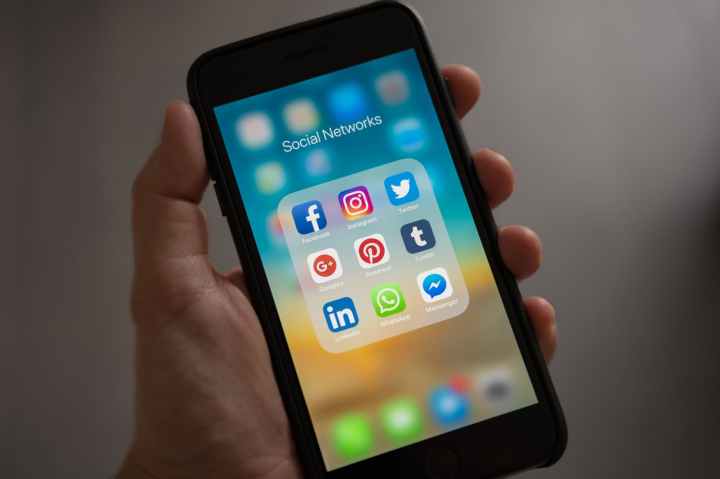
In less than a life span, computers have evolved from taking up the space of an entire building, to fitting nicely into our smallest pockets.  The level of development for this continuously expanding technology, and the speed at which it is occurring is revolutionizing the world we live in from generation to the next.   We now communicate and operate using methods and technologies my parents couldn’t have imagined in their wildest dreams when they were my age.

apple applications apps cell phone
Photo by Tracy Le Blanc on Pexels.com

Of course, as expected, these waves of massive change have sparked an ongoing debate on what the nature of the long term ramifications of these new technologies will be.  Many critics argue that the emergence of social media heightens narcissistic tendencies in our developing youth, and worry that constant access to news stories and world events is a causing a desensitization to the occurrences around us.  However, I’m not convinced that these are the true issues that will arise from the technological boom.

Computational devices have been following a growth pattern in the same exponential trajectory since the late 1800s, remaining unaffected by any economic boom or bust in its history, including the Great Depression.  In fact, the rate of growth has been so constant, that engineers like Ray Kurzweil have been able to make wildly accurate predictions about future technologies long before they occurred, simply by considering the exponential trajectory.

Information technology is going to continue to develop and improve at this extremely rapid rate; there’s nothing we can really do about that.  Therein lies the true concern.

As human beings, we struggle to truly comprehend, and respond to this rate of exponential growth, and as a result, our societal structure and our laws are not capable of advancing at the same rate.  While it’s incredible that modern technology is responsible for the success of the Human Genome Project, which might, one day, eradicate the genes responsible for a predisposition to cancer; it begs the question of whether or not our health care system will adapt quickly enough to make this treatment accessible to the public.  Will this technology, with the potential of breeding a superior human that immune to the diseases that kill so many,  be afforded only by a privileged few? Gene therapy and DNA software could easily become a destructive contributor to the already troubling wage gap between the top 1% and the rest of the world.  If you ask me, this is far more concerning than the number of selfies that are posted in a day.  What do you think?


Take A Moment…

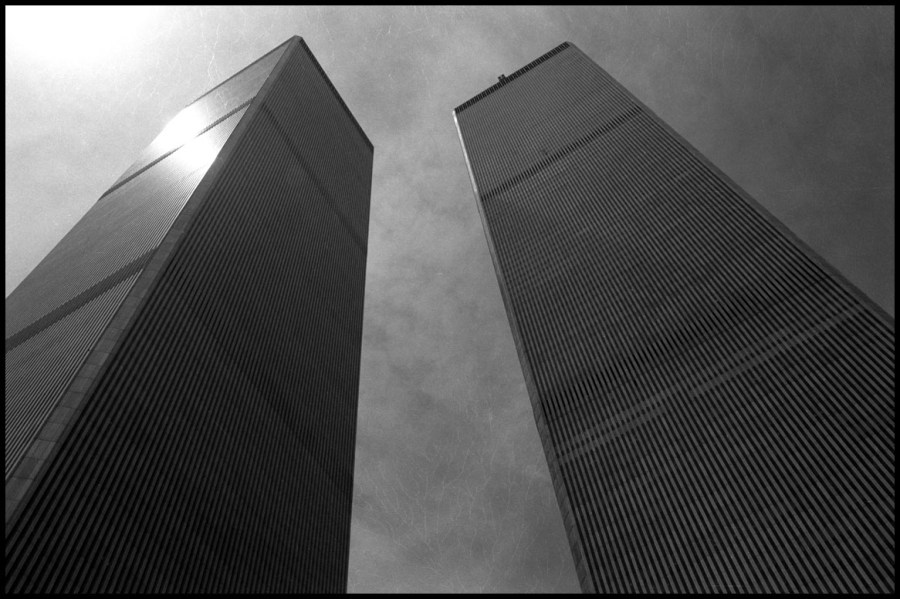
Our lives are busy. Each day comes and goes, blurring into weeks and months, making it easy to forget to take a moment to pay our respects to the 2,996 fine men and women who lost their lives on this day, 17 years ago.  See this as a reminder, and designate a second to acknowledge the weight this date carries.

September 11th was a tragedy of an incomprehensible scale as the senseless attacks were not inflicted solely on the United States, but also on humanity as a whole.  In our society, we have a tendency to fixate on what divides us. Differences of opinion, conflicting cultures, belief systems, even the color of our skin are used to separate us, cause conflict and wars, and continuously move us farther away from the bigger picture.  Let this day show you the irrelevance of such details; let it symbolize our likeness to one another as a nation, and furthermore, as members of the human race.  We all feel pain, and more importantly we all want our lives to be filled with love, joy, and success.

Today, take a second to reevaluate the time we spend on earth, and the energy we project in our daily lives.  Get to know one another, learn to accept and respect our differing qualities, and recognize that which unites us.  We are more alike than you might initially think us to be.

american-american-flag-flag-973049

Featured image: Photo by Michael Casey (April, 1988) from creativecommons.org

Photo by Sawyer Sutton (December, 2017) from pexels.com

Sitcom’s Last Laugh?

Let’s discuss:  Has the classic American sitcom, a staple for families all over the country (and all over the world!) reached the end of it’s hay-day?

A live studio audience, hilarious antics, and lovable characters were welcomed into the home of millions of families worldwide.   Once a week, after a long day in the real, sometimes not-so-funny world, we would all gather in front of the television and watch half an hour of comedy gold.  The desire to laugh bread the massive success of a slew of long running shows that dominated the ratings for the better part of the 80s, 90s and early 2000s.  Shows such as M.A.S.H., Cheers, Roseanne, Frasier, Seinfeld, and Friends became big money makers for the major networks: NBC, CBS, and ABC.

NBC in particular dominated this era of comedy, coining the term “Must See TV” in reference to their Thursday night prime time slot, filled with back to back viewings of their most popular shows.  The marketing technique, in conjunction with great writing teams and solid casting, solidified almost two decades of a dedicated spot for the classic sitcom.

people-3281583_1920

So, what happened? When you think of popular TV today the sitcom doesn’t really stand out; in fact, many modern-day comedies are not even filmed in the classic sitcom format: with a live studio audience or a laugh track (with a few exceptions of course).  Shows like The Office, and Parks and Recreation, while successful in ratings, are a clear departure from the comedy style that America once loved.  Has the traditional sitcom become out dated…has it had its last laugh?  How is it that the style of television that launched the careers countless household names, such as Jerry Seinfeld and Jennifer Aniston, has become obsolete? Are audiences simply no longer interested?

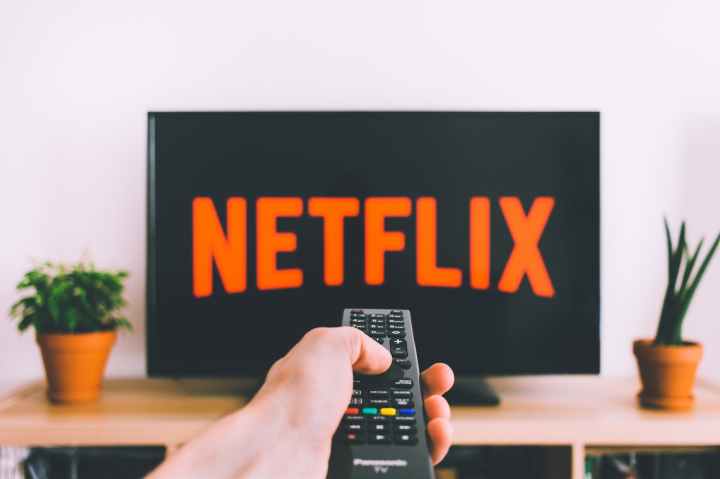
There might be something to this argument, as most modern traditional “sitcom-style” shows get cancelled after one or two seasons.  However, TV streaming sites, such as Netflix and Hulu, boast high volumes of streamers that revisit these same shows that were so successful in the past.  A large majority of these viewers belong to the younger generations, many of which weren’t even born when these shows initially aired.

closeup photo of person holding panasonic remote control in front of turned on smart television
Photo by freestocks.org on Pexels.com

The result: These shows are enjoying a resurgence of popularity as young people fall in love with the characters, and are even pushing for reboots to continue on with the story lines. So what is going on here? Why are new sitcoms so poorly received, while the older ones are still held in high regard, even by new viewers? Are the older shows actually of a better quality?  Brandon Gallagher and Tyler Watamanuk review the classic, Frasier, by saying, “Though Frasier will be remembered as one of the greatest sitcoms of all time, we don’t give it enough credit for simply not being obnoxious…The trust between the writers and the actors on this show created an environment where obtuse gags could land with stunning effectiveness.”  Do modern shows lack the “magic” responsible for the success of their predecessors?  Or is it possible that the newer shows are not of a lesser quality at all, but that the low ratings are caused by a lack of nostalgia and vintage aesthetic that drive viewers to revisit the classics instead? Tell me what you think.

Featured Image: Andrew Webber (July, 2015) from Pexels.com

Photo (March, 2018) from Pexels.com

Photo by freestock.org (March, 2018) from Pexels.com

Gallagher, B. (Feb. 2018). “The Best One-Liners In Sitcom History.” complex.com. Retrieved September 2018, from https://www.complex.com/pop-culture/best-one-liners-in-sitcom-history/